
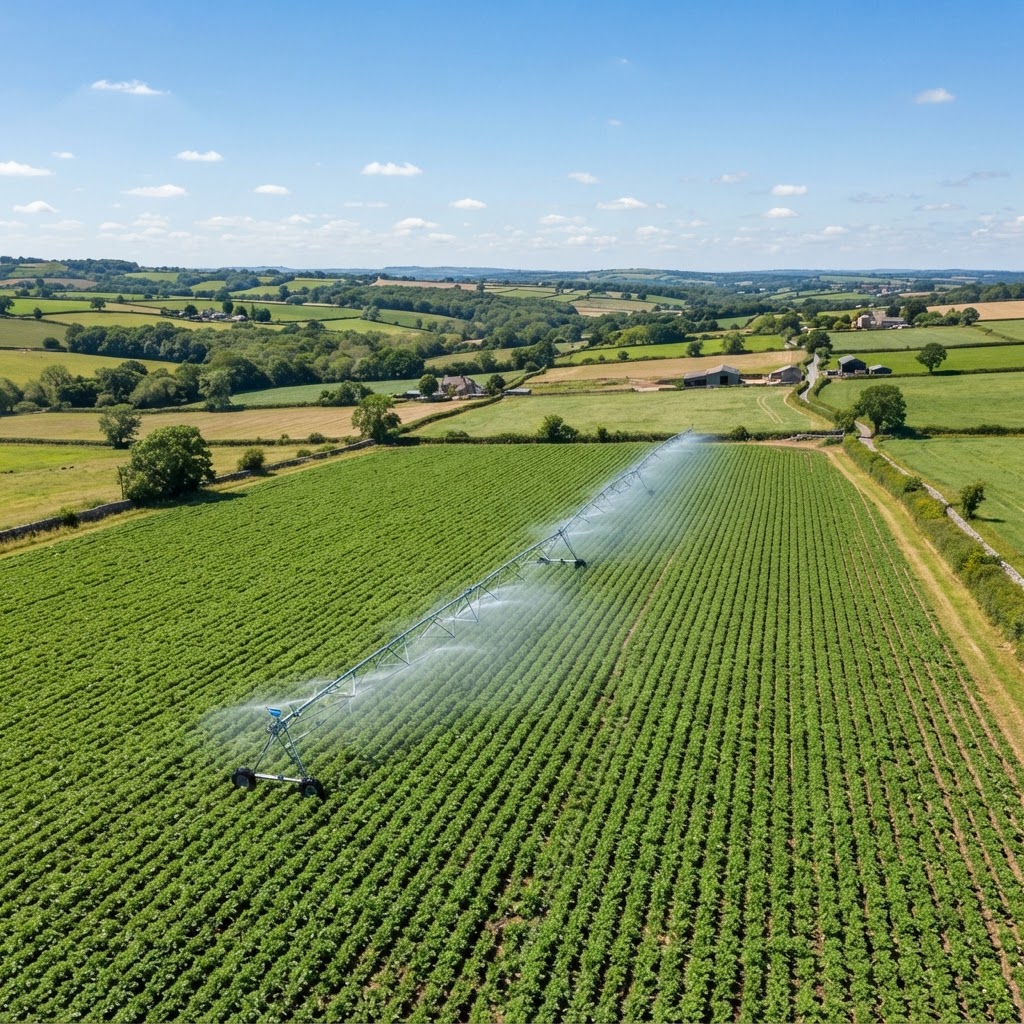
What are Nitrate Vulnerable Zones (NVZs)?
Nitrate Vulnerable Zones are areas designated by DEFRA where groundwater or surface waters are polluted by nitrates from agricultural sources, or are at risk of such pollution. NVZ designation brings mandatory farming rules restricting fertilizer application, manure storage, and crop management to reduce nitrate pollution.
England has approximately 58% of land designated as NVZ, covering most lowland agricultural areas. NVZ rules apply to all agricultural holdings in designated areas, from small farms to major agricultural businesses.
Why Are NVZs Designated?
NVZs aim to protect water quality and implement the EU Nitrates Directive (retained in UK law post-Brexit). Designation occurs where:
- Nitrate concentrations exceed limits - Groundwater or surface waters exceeding 50mg/l nitrate (drinking water standard)
- Eutrophication present or likely - Waters showing algal blooms, oxygen depletion, or biodiversity loss from nutrient enrichment
- Waters supply drinking water - Sources used or intended for public water supply
Check if land is in a Nitrate Vulnerable Zone using our free NVZ map. Search by postcode to see Environment Agency NVZ designations.
NVZ Farming Rules
Farmers in NVZs must comply with statutory rules controlling nitrogen application:
Fertilizer Application Limits
Nitrogen limits - Maximum 170kg nitrogen per hectare from organic manures (slurry, farmyard manure, poultry litter). Derogations to 250kg/ha available for farms over 80% grassland.
Crop nitrogen requirements - Manufactured fertilizer applications must not exceed crop nitrogen requirements calculated using RB209 Fertiliser Manual recommendations.
Application timing - Prohibited periods prevent spreading when:
- Ground is waterlogged, flooded, or snow-covered
- Soil is frozen (hard frost preventing infiltration)
- Heavy rainfall forecast within 48 hours
- Closed periods apply (autumn/winter for grassland and tillage)
Manure Storage Requirements
Minimum storage capacity - Farms must have storage for 5-6 months manure/slurry production (typically October-February when spreading is restricted).
Storage must meet construction standards:
- Impermeable bases and walls preventing leakage
- Adequate capacity with 750mm freeboard
- At least 10 metres from surface waters or field drains
- At least 50 metres from springs, wells, or boreholes
Constructing compliant manure storage costs £40,000-£150,000 depending on farm size. Grants may be available through Countryside Stewardship or farming investment schemes.
Record Keeping
Farmers must maintain records for 5 years including:
- Risk maps showing fields near water, steep slopes, and drainage features
- Planning records documenting when, where, and how much nitrogen was applied
- Manure and slurry storage records
- Soil sampling results (required every 5 years)
Inspections by Environment Agency and Rural Payments Agency check compliance. Non-compliance can result in prosecution, cross-compliance penalties reducing farm subsidies, and enforcement action.
Nutrient Neutrality for Development
In catchments draining to protected wetlands (SACs, SPAs, Ramsar sites), new development must achieve nutrient neutrality - no net increase in nitrogen or phosphorus entering protected waterbodies.
Affected Catchments
Natural England has identified nutrient neutrality catchments including:
- Somerset Levels and Moors
- Solent maritime (Hampshire, Isle of Wight)
- Poole Harbour (Dorset)
- River Axe catchment (Devon/Somerset)
- Parts of the Midlands (Humber, Mersey, Dee estuaries)
- Stodmarsh (Kent)
Development in these catchments faces significant delays and costs unless nutrient neutrality can be demonstrated.
Calculating Nutrient Budgets
Nutrient neutrality requires calculating the nutrient load from development:
Inputs - Wastewater nutrients from new residents (occupancy × per capita nutrient generation × wastewater treatment removal efficiency)
Outputs - Nutrients removed through mitigation measures
Net change - Must be zero or negative (net reduction)
Typical house generates approximately 3.5kg nitrogen per year after wastewater treatment. Achieving neutrality requires mitigating this through land use change or treatment upgrades.
Mitigation Strategies
Developers deliver nutrient neutrality through:
Land use change - Converting agricultural land to woodland or wetlands removing nutrient inputs:
- 1 hectare arable to woodland offsets approximately 25-40 houses
- Constructed wetlands intercept and process nutrients from farmland runoff
- Requires securing land and 80+ years management
Purchasing nutrient credits - Buying credits from nutrient mitigation schemes. Market rates vary by catchment (£15,000-£50,000 per house for nitrogen, £20,000-£100,000 for phosphorus).
Wastewater treatment upgrades - Enhanced treatment reducing effluent nutrient concentrations. Requires water company agreement and is rarely achievable for individual developments.
Planning Implications of Nutrient Neutrality
Nutrient neutrality has caused major delays to housing delivery:
- Scheme viability - Mitigation costs of £20,000-£50,000 per dwelling affect development viability
- Land assembly - Securing mitigation land adds complexity and time to development
- Delivery delays - Average 12-18 months additional delay agreeing and securing mitigation
- Strategic solutions - Some Local Authorities are procuring strategic mitigation allowing developers to purchase credits
Government has introduced measures to accelerate housing including:
- Natural England nutrient mitigation schemes providing credits
- Permitted development exemptions for some small extensions
- Strategic mitigation funded by local authorities
Phosphate Pollution and Protected Sites
Some catchments face phosphate pollution rather than nitrate pollution. Phosphorus primarily comes from:
- Wastewater treatment works effluent
- Agricultural runoff from livestock farming
- Septic tanks and package treatment plants
Phosphate neutrality follows similar principles to nitrate neutrality but mitigation is more challenging:
- Phosphate is more difficult to remove from wastewater
- Land use change mitigation is less effective for phosphorus
- Wetland creation can release phosphorus from soils
River Wye catchment and other upland river SACs particularly affected by phosphate pollution with severe development constraints.
Buying Agricultural Land in NVZs
If purchasing farmland in Nitrate Vulnerable Zones, consider:
Farming Restrictions
- Capital investment required - Compliant manure storage costs £40,000-£150,000
- Operational constraints - Restricted spreading windows limit farming flexibility
- Record keeping burden - Detailed documentation requirements increase administration
- Enforcement risk - Non-compliance penalties include fines and subsidy reductions
Mitigation Opportunities
- Selling nutrient credits - Converting land to woodland or wetlands generates credits saleable to developers (potentially £10,000-£30,000 per hectare capitalized value)
- Agri-environment schemes - Countryside Stewardship payments for nutrient management and buffer strips
Some farmers in NVZ catchments with nutrient neutrality requirements are finding selling nutrient credits more profitable than continuing agricultural production.
Check NVZ designation alongside Source Protection Zones and environmental designations for complete agricultural constraints assessment.