
Source: Ofcom
Broadband & Mobile Coverage Map UK
Check gigabit and superfast broadband availability, plus 4G and 5G mobile network coverage, for any UK address before committing to a location.
What This Layer Shows
This layer maps Ofcom connectivity data: gigabit-capable broadband (full fibre and cable, 1000+ Mbps), superfast broadband (30+ Mbps via fibre-to-the-cabinet), and 4G/5G mobile coverage from EE, Vodafone, O2 and Three. Gigabit broadband now reaches around 79% of UK premises, with superfast reaching roughly 97%.
Digital exclusion areas below the Universal Service Obligation threshold are also flagged, relevant to Project Gigabit funding eligibility and alternative connectivity solutions.
Why It Matters
Connectivity affects both day-to-day usability of a property — particularly for remote working — and, since 2022, new-build compliance obligations. Buyers and developers check this layer to confirm realistic broadband speeds and mobile coverage before committing to a location, rather than relying on generic marketing claims from providers.
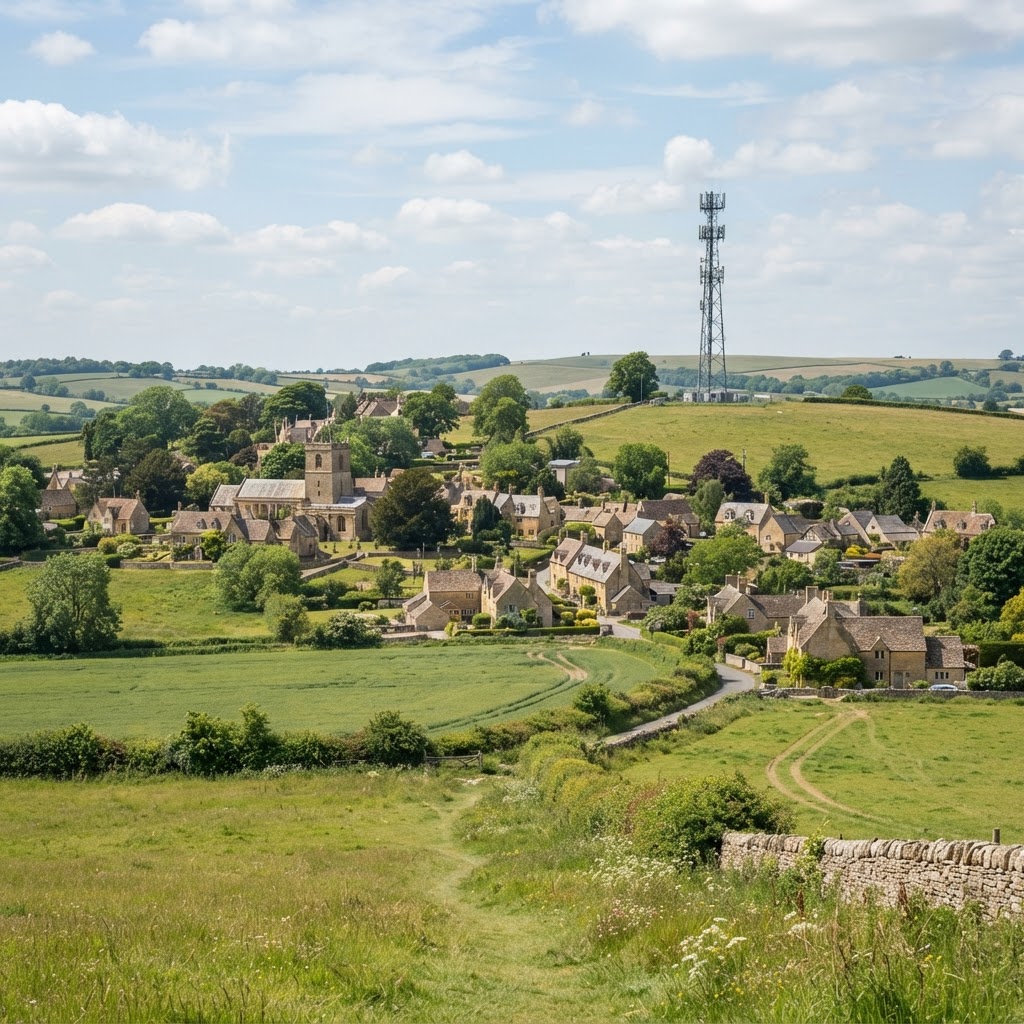
For rural sites specifically, checking both broadband and mobile coverage together identifies whether a 4G/5G home broadband fallback is viable if fixed-line speeds prove insufficient.
How to Interpret the Map
Gigabit broadband
Full fibre or cable connection capable of 1000+ Mbps — available to around 79% of UK premises.
Superfast broadband
Fibre-to-the-cabinet connection of 30+ Mbps — available to around 97% of UK premises.
4G / 5G mobile coverage
Predicted network coverage from the four major UK mobile operators.
Planning and Development Implications
Building Regulations Part R (2022) requires new homes to have a gigabit-capable broadband connection, with developer-funded infrastructure required where the connection cost falls under a set threshold. This applies to most new residential development and should be factored into site infrastructure costs from the outset.
For sites in digitally excluded areas, developers may need to coordinate with network operators or Project Gigabit funding to secure adequate connectivity for a scheme.
What to Do When a Site Is Affected
- 1Confirm exact broadband tier and mobile coverage with Ofcom's official checker for the specific address.
- 2For new development, budget for gigabit-capable infrastructure under Building Regulations Part R.
- 3Check Project Gigabit funding eligibility for sites below the Universal Service Obligation threshold.
- 4Consider 4G/5G home broadband as a fallback for rural sites with limited fixed-line speeds.
- 5Check the wider Transport Infrastructure layer for the same site for the fuller connectivity and access picture.
This is general guidance, not professional or legal advice — confirm specifics with the relevant authority or a qualified professional.
Official Data Source
Data Freshness
Important Limitations
- Coverage maps show predicted availability, not a guarantee of achievable speed at a specific address.
- Mobile coverage predictions can differ from real-world indoor performance.
- This map does not replace Ofcom's official checker for a definitive address-level result.
- Infrastructure rollout can outpace data refresh cycles in fast-changing areas.
Common Use Cases
Property Buyers
Confirm realistic connectivity before committing to a remote-working home.
Property Developers
Budget for Building Regulations Part R gigabit connectivity requirements.
Rural Landowners
Identify connectivity gaps and funding options for a site.
Surveyors
Factor connectivity into valuation and feasibility reports.
Related Layers
Connectivity checks are often run alongside these related searches.
Frequently Asked Questions
How do I check broadband speed for a property?
Search the property address on Maplify and enable the Gigabit Broadband and Superfast Broadband layers to see which speed tiers are available there, then verify exact speeds with individual providers.
What is the Universal Service Obligation?
The USO gives UK premises a legal right to request a 10Mbps+ broadband connection if nothing faster is commercially available, with BT/Openreach required to provide it at a capped contribution cost of £3,400.
Does this map show exact broadband speeds or just availability?
It shows availability of gigabit, superfast and other broadband tiers for an area. Actual achievable speed depends on factors like distance from the cabinet — always confirm exact speeds with the provider.
How reliable is rural mobile coverage data?
Coverage layers show predicted coverage from network operators, which can differ from real-world performance indoors or in sheltered locations.
Do new homes have to include gigabit broadband?
Yes. Building Regulations Part R (2022) requires new homes to have a gigabit-capable broadband connection, with developer-funded infrastructure required where the connection cost is under a set threshold.
References and Methodology
Reviewed by the Maplify data & editorial team
Maplify displays official-source data for desktop screening and due diligence. We document where each dataset comes from, how it is processed, when it is checked and where its limitations matter.