
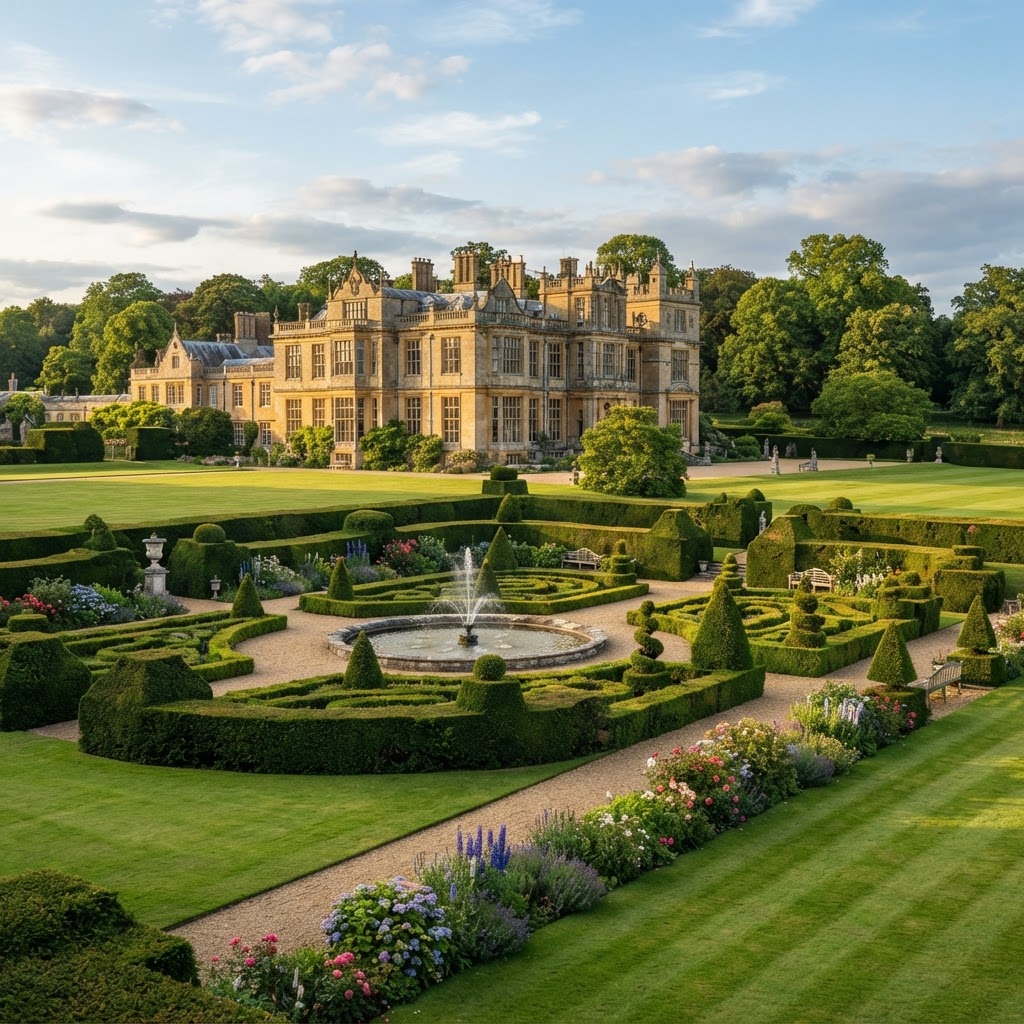
What are Registered Parks and Gardens?
Registered Parks and Gardens of Special Historic Interest in England are historically significant designed landscapes protected by planning policy. Historic England maintains the Register identifying approximately 1,700 sites ranging from grand country house parks and urban public parks to botanic gardens, cemeteries, and institutional landscapes.
Unlike listed buildings or scheduled monuments, registration does not bring statutory controls - you don't need consent to alter registered landscapes. However, registration is a material consideration in planning decisions, requiring assessment of development impacts on historic landscape character.
Why Are Parks and Gardens Registered?
Parks and gardens are registered for their special historic interest including:
- Design interest - Layouts by notable designers (Capability Brown, Humphry Repton, Gertrude Jekyll)
- Historic associations - Connections with important people, events, or institutions
- Group value - Relationship with buildings or structures within the landscape
- Horticultural interest - Rare plant collections or innovative planting schemes
- Architectural interest - Garden buildings, follies, bridges, gates of special interest
Check if land is within registered parks or gardens using our free heritage map viewer. Search by postcode to see registered landscapes and their grades.
Registered Parks and Gardens Grading
Registered parks and gardens are graded according to their relative significance, similar to listed buildings:
Grade I Registered Landscapes
Sites of exceptional interest. Only approximately 8% of registered parks are Grade I, including:
- Major palace gardens (Hampton Court, Kensington Gardens, Kew Gardens)
- Internationally renowned country house parks (Blenheim Palace, Chatsworth, Stowe)
- Pioneering landscape designs by Capability Brown and Humphry Repton
- Outstanding botanic gardens and arboreta
Grade II* Registered Landscapes
Parks of more than special interest. Approximately 29% of registered parks are Grade II*, including important country house estates, urban parks of national importance, and significant designed landscapes.
Grade II Registered Landscapes
Parks of special interest warranting protection. The majority (63%) of registered parks are Grade II, including municipal parks, Victorian garden squares, cemetery landscapes, and country house parks of regional importance.
The grading affects the weight given to conservation in planning decisions, but all grades require heritage impact assessment for significant development proposals.
Planning Policy for Registered Parks and Gardens
National Planning Policy Framework (NPPF paragraph 203) requires Local Planning Authorities to assess the effect of proposed development on the significance of registered parks and gardens as designated heritage assets.
Heritage Impact Assessment Requirements
Development within or affecting the setting of registered parks requires Heritage Impact Assessment addressing:
- Significance - What makes the landscape historically important (design, associations, features)?
- Contribution of affected area - How does the development site contribute to overall significance?
- Impact on key views - Effect on designed vistas, sight lines, and landscape appreciation
- Impact on spatial relationships - Changes to designed spatial sequences and garden structure
- Impact on designed features - Effects on historic planting, water features, terraces, paths
- Impact on setting - Development visible from the landscape or affecting its rural context
Historic England must be consulted on applications affecting Grade I and II* registered parks. Their advice is a material consideration carrying significant weight in decision-making.
Common Development Impacts
Visual intrusion - Buildings or structures breaking designed skylines or interrupting key views. 18th-century landscapes were designed with carefully composed views to eyecatchers, follies, or distant landmarks.
Loss of historic fabric - Development removing historic planting, garden buildings, terracing, or water features directly harms significance.
Subdivision - Dividing unified designed landscapes into separate ownerships can compromise coherent management and prevent landscape reading as a whole.
Change to setting - Development in surrounding countryside affecting the rural context of historic landscapes or introducing incongruous elements.
Development Within Registered Landscapes
Not all development within registered parks is harmful. Appropriate development may include:
Enabling Development
Enabling development is development permitted (despite causing some harm to heritage significance) because it secures the future conservation of the heritage asset. For registered parks, this might include:
- Limited residential development funding parkland restoration
- Commercial uses generating income for landscape maintenance
- Public access infrastructure supporting heritage tourism
Enabling development must be the minimum necessary to secure conservation, with heritage benefits clearly outweighing harm. Historic England's Enabling Development guidance sets strict tests.
Restoration and Management
Development supporting landscape restoration is viewed favorably:
- Rebuilding lost or derelict garden buildings
- Restoring historic water features, terraces, or paths
- Reinstating historic planting schemes
- Removing later inappropriate additions or planting
Restoration should be based on historical evidence (estate maps, paintings, archaeological survey) rather than conjecture. Conservation Management Plans guide appropriate interventions.
Conservation Management Plans
Conservation Management Plans (CMPs) are strategic documents setting out the significance of historic landscapes and policies for their conservation and management. CMPs typically include:
- Historical development - Evolution of the landscape from creation to present
- Statement of significance - Identifying what makes the landscape historically important
- Condition survey - Assessing condition of features and identifying threats
- Management policies - Setting conservation principles and priorities
- Action plan - Practical works to conserve and enhance significance
Planning applications for significant change should be informed by CMPs. Historic England and Heritage Lottery Fund require CMPs for major grant applications.
Parks and Gardens on the Heritage at Risk Register
Historic England's Heritage at Risk Register identifies registered parks and gardens in poor condition or facing threats:
- Neglect and decay - Loss of historic features through lack of management
- Development pressure - Incremental development eroding landscape character
- Inappropriate management - Agricultural intensification or forestry damaging historic character
- Natural threats - Disease (ash dieback, oak decline) affecting historic trees and planting
Approximately 12% of registered parks are on the at-risk register. Bringing at-risk landscapes into favorable condition is a heritage sector priority with grant funding available through Historic England, Heritage Lottery Fund, and National Trust.
Buying Property in Registered Parks
If you're purchasing property within or adjacent to registered parkland:
Planning Implications
- Development restrictions - Extensions, outbuildings, or garden development may be restricted if harming landscape character
- Change of use constraints - Subdividing gardens or changing land use may be refused
- Design standards - Buildings must respect historic landscape setting and designed views
- Tree and planting controls - Historic trees may be protected, replanting may be required
Benefits and Opportunities
- Landscape quality - Living in or near nationally significant historic landscapes
- Protection from development - Designation prevents harmful neighboring development
- Heritage grants - Potential access to landscape restoration funding
- Property values - Historic parkland location often commands premium prices
Many country houses within registered parks have been subdivided into apartments or separate dwellings. Understand what parts of the landscape are included in your ownership and what management responsibilities apply.
Check registered parks alongside other heritage constraints including listed buildingsand conservation areas for comprehensive heritage desktop study.