
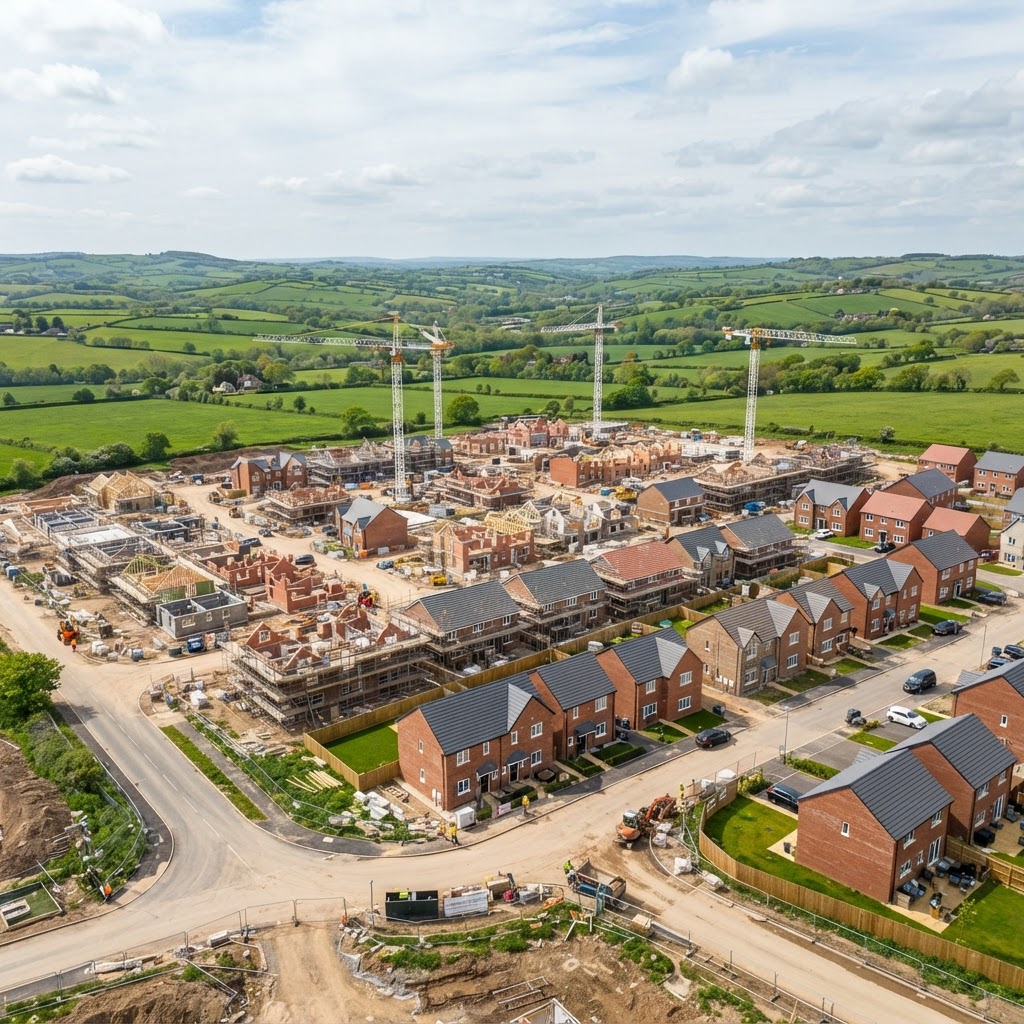
Residential Development · Case Study
Northfield Developments
How a regional developer screens a full land pipeline before committing survey budget to any single site.
3 weeks
of due diligence saved per project
The Challenge
Northfield's land team was reviewing a steady pipeline of potential sites but had no efficient way to compare them against each other for planning risk — meaning survey and legal budget was sometimes committed to sites that were later found to be in Green Belt or affected by a restrictive Article 4 Direction. Sites were being ranked largely on guide price and location, without a consistent early view of constraint risk.
The Solution
The team now runs every candidate site through Maplify as the very first filter, screening Green Belt status, flood risk, heritage designations and Local Plan allocations across the whole shortlist in a single sitting, before ranking sites by realistic development potential. Only sites that clear this first filter move on to instructing external legal and survey work.
Approach in Detail
- Runs every candidate site through Maplify as the first filter, before committing survey or legal budget.
- Screens Green Belt status, flood risk, heritage designations and Local Plan allocations across the whole shortlist at once.
- Ranks sites by realistic development potential rather than guide price alone.
- Only instructs external legal and survey work on sites that clear the first filter.
The Result
Northfield now discounts unviable sites in the first afternoon of review rather than several weeks into due diligence, saving an estimated three weeks of legal and survey time per project that would previously have been spent on sites later ruled out. The land team can also review a larger pipeline in the same amount of time, since screening no longer requires manually checking each site against several separate government portals.
"We stopped spending survey budget on sites that were never going to get permission. That filter alone paid for itself in the first month."
— Land Director, Northfield Developments
Results at a Glance
3 weeks
Legal & survey time saved per project
1 afternoon
To screen a full site shortlist
↓
Budget spent on unviable sites
Why This Matters for Residential Development
Northfield Developments is one of a growing number of residential development practices moving constraint checks earlier into the workflow rather than treating them as a late-stage validation step. By starting every instruction with a single, evidenced Maplify search — rather than manually cross-referencing several separate government portals — the team removed a significant source of repeated, low-value work from every project, and reduced the risk of a constraint being discovered late enough to disrupt a client relationship or a delivery timeline.
The underlying pattern is one Maplify sees across sectors: teams that screen constraints first, before committing meaningful time or budget to a site, can reduce time spent on rework and more time on the judgement-based work that actually needs a qualified professional. Whether that is a chartered surveyor's physical inspection, an architect's design response, or a planning consultant's case for a scheme, the constraint data itself is now a fast, standardised starting point rather than a bottleneck.
Want results like these?
See how Maplify fits your workflow — talk to our team or try the map free.
Talk to our team